1830s–1880sThe first little locomotives
As full-size railways transformed travel in the nineteenth century, toy makers began bringing locomotives into the home. Early examples were made from wood or metal and could be pushed, pulled or powered by simple mechanisms. These were usually objects to play with or marvel at; an exact scale was not always the priority.
The appeal was already familiar: the movement of a locomotive and the possibility of creating a world around it. Model railways grew alongside the real thing, carrying the excitement of a new technology into everyday life.
Late nineteenth centuryA railway you could build on
A major step came with commercially produced trains and compatible track. Märklin’s clockwork railway systems of the 1890s helped establish the idea that a train set could keep growing: more track, another carriage, a station, a new route.
Tinplate trains were colourful and robust. Rather than being a single self-contained toy, a railway could become an ongoing project. The expandable system remains at the heart of the hobby today.
Explore the Casino Model Railway Museum’s railway stories ↗ for an introduction to early railway toys.
Early twentieth centuryElectricity changes everything
Electric motors made sustained running easier and gave operators a different kind of control. Over time, builders could vary speed, arrange points and signals, and create more elaborate operating sequences.
Manufacturers including Märklin, Lionel and Hornby helped shape distinctive traditions in Europe and North America. Larger toy trains and increasingly realistic scale models developed side by side; there was never just one way to enjoy the railway.
1930s–1970sA world that fits at home
Smaller scales made it possible to fit more railway into an ordinary room. H0, at 1:87, became widely established, while British OO developed at 1:76.2. TT and N offered still more room for sweeping landscapes and longer trains.
After the Second World War, home layouts and clubs became an important part of the hobby. Builders increasingly studied real stations, train formations and railway operations. A convincing railway was about the whole scene, from track geometry to the buildings beyond the platform.
1980s–todayThe digital railway
Digital control changed the relationship between the operator and the locomotive. Commands sent through the track can address individual decoders, allowing compatible trains to move independently on the same powered rails. The NMRA’s Digital Command Control standards helped make interoperability a central part of this development.
Sound, lighting and computer-assisted operation add further possibilities. Yet technology remains a choice: an analogue layout, a battery-powered garden railway and a sophisticated DCC installation can each offer an absorbing railway experience.
For the technical reference, see the NMRA standards and recommended practices ↗.
Today & tomorrowA living, shared craft
Today’s model railway combines many skills: research, carpentry, wiring, painting, scenery making and patient observation. Digital design and 3D printing can supply bespoke parts, while traditional hand-built details still give a layout its character.
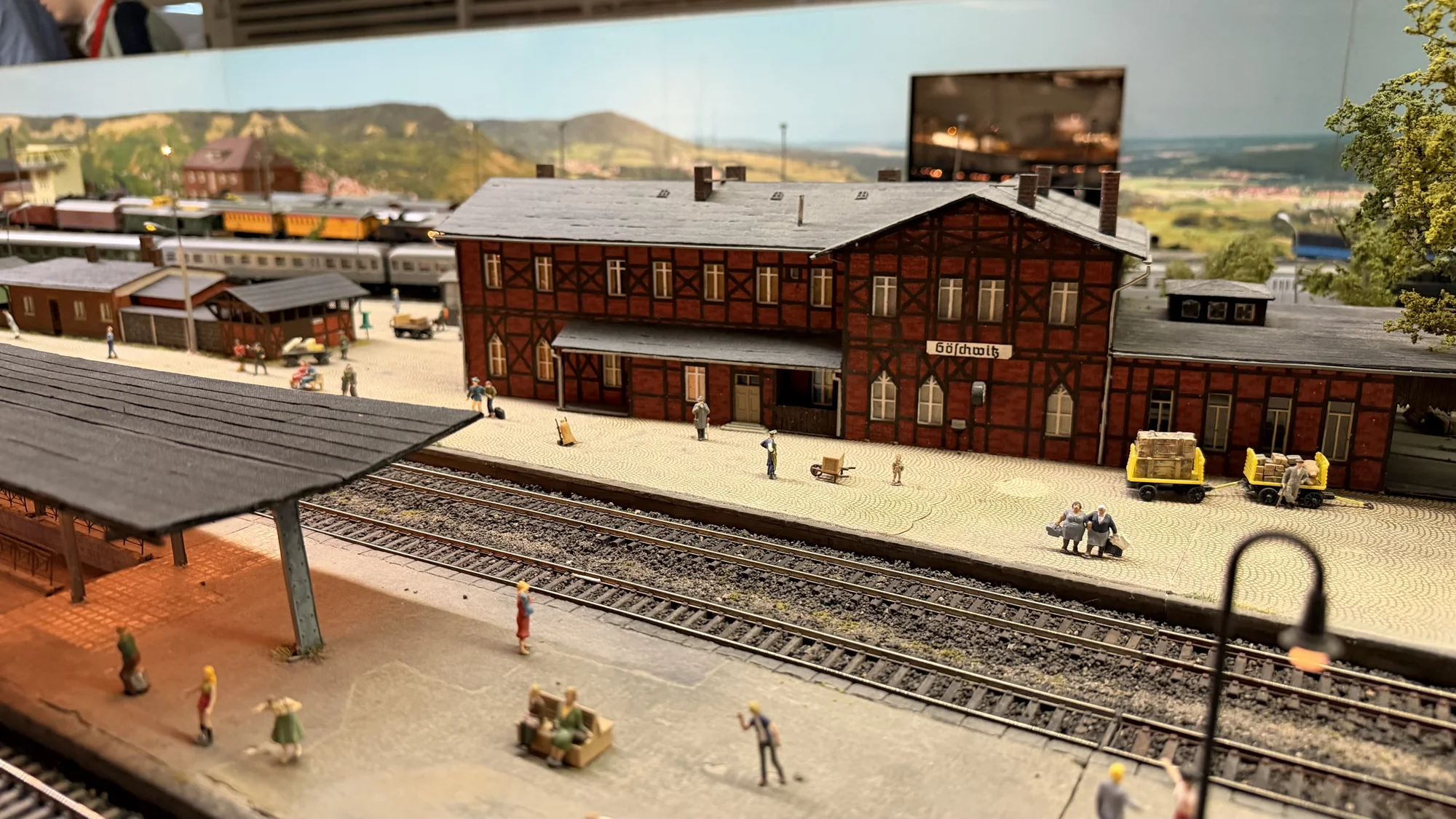
Clubs keep knowledge moving between generations. At Eisenbahnclub Erfurt 1965 e.V., railway history becomes a place visitors can explore, through miniature stations, carefully observed buildings and working trains. The pleasure is as much in sharing the world as in building it.
A quick guide to scales.
Scale describes how much the real thing has been reduced. Gauge is the distance between the rails. They are related, but they are not the same measurement.
| Scale | Typical ratio | A useful starting point |
|---|---|---|
| G / garden railways | Varies | Large models, often designed for outdoor running. |
| O | 1:43.5–1:48 | Larger models; the ratio varies by country. |
| OO | 1:76.2 | A familiar British modelling scale. |
| H0 / HO | 1:87 | A balance of detail and layout size. |
| TT | 1:120 | Between H0 and N in size. |
| N | 1:160 / 1:148 | Compact; ratios vary by country and prototype. |
| Z | 1:220 | A very small scale for compact worlds. |
Keep exploring.
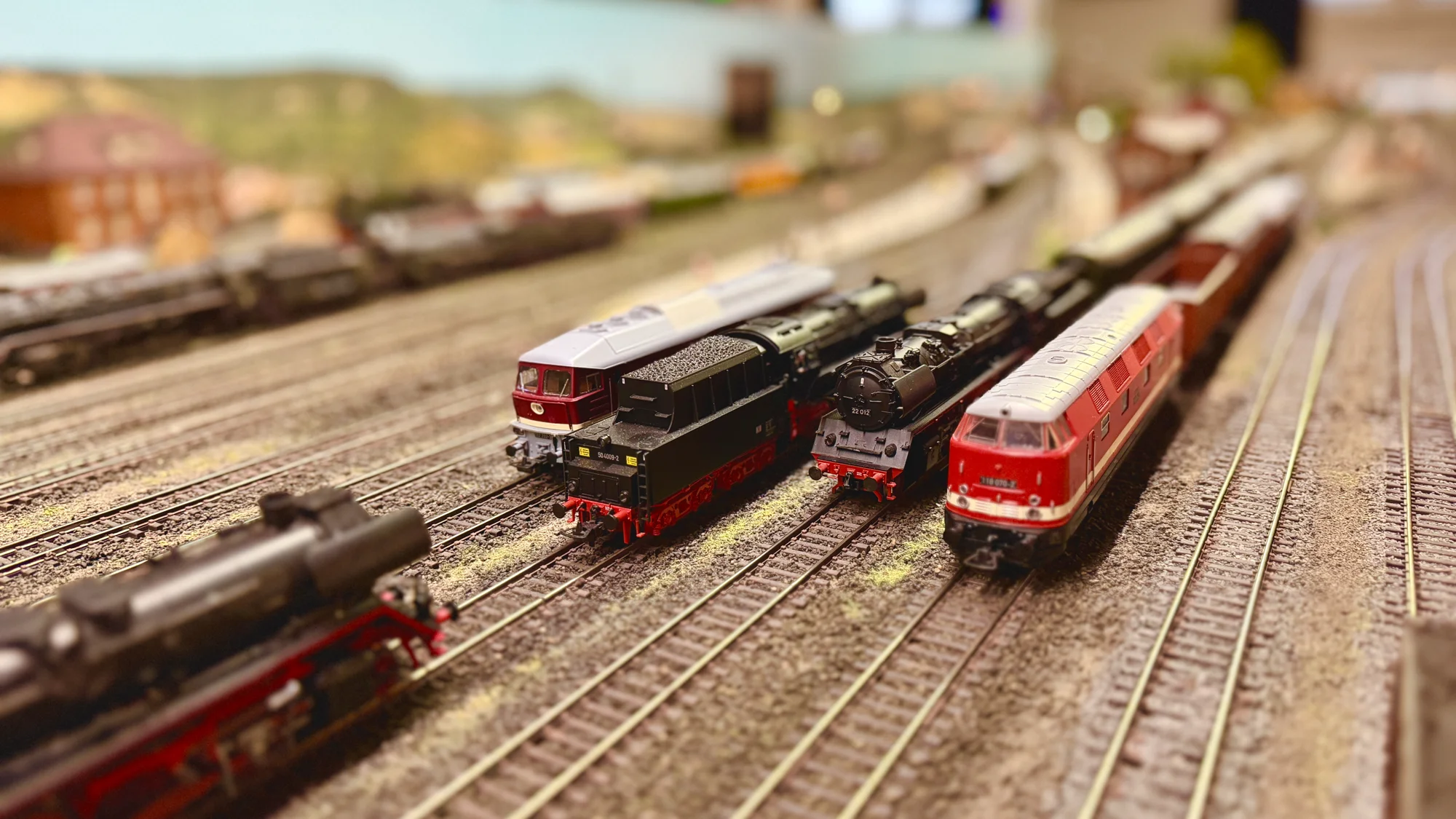
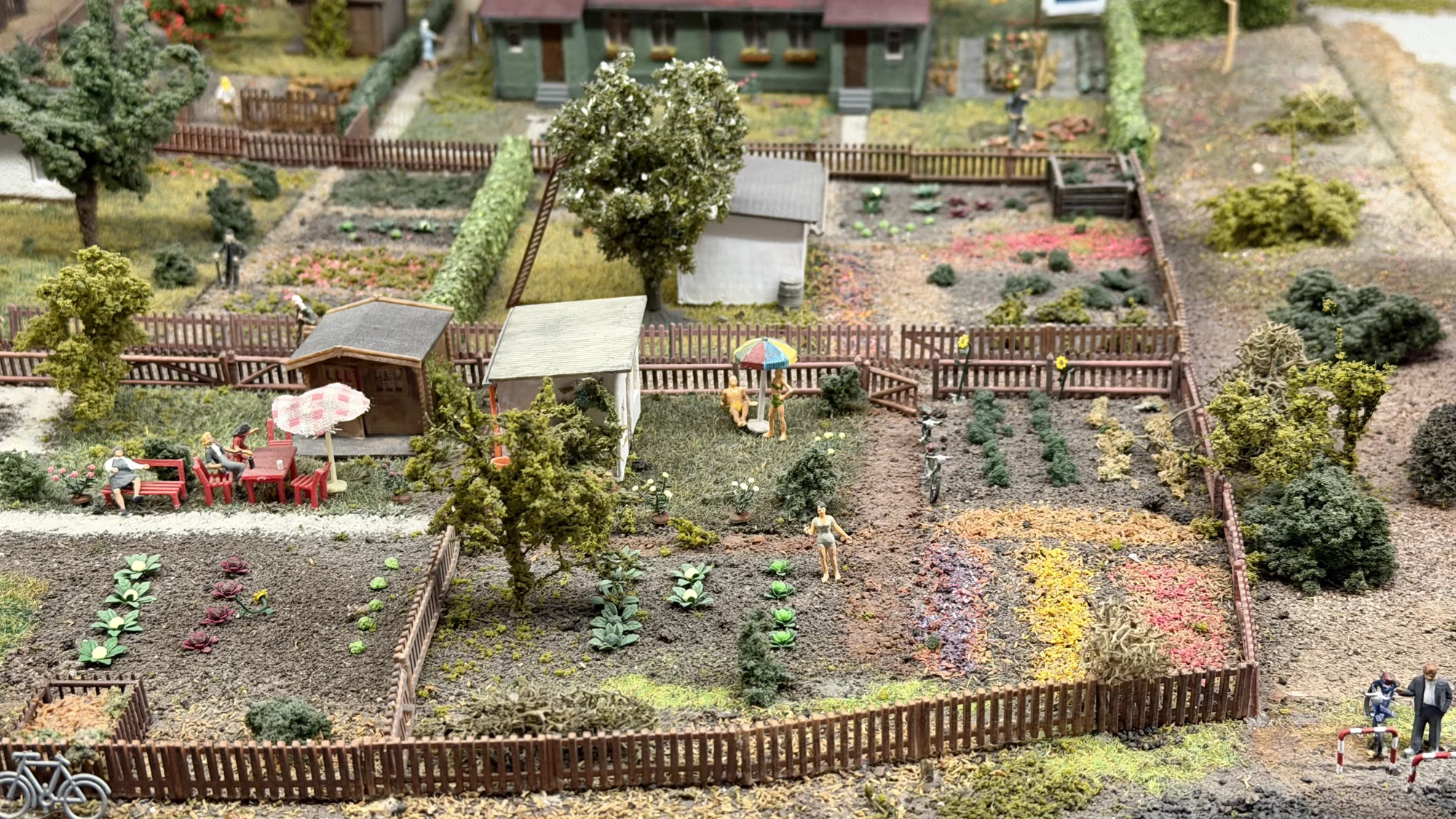
This introduction draws on museum accounts and railway modelling references. The photos show contemporary Erfurt layouts, illustrating the craft rather than individual historical artefacts.